Skylights can bring natural light into a home and make a room feel larger and brighter.
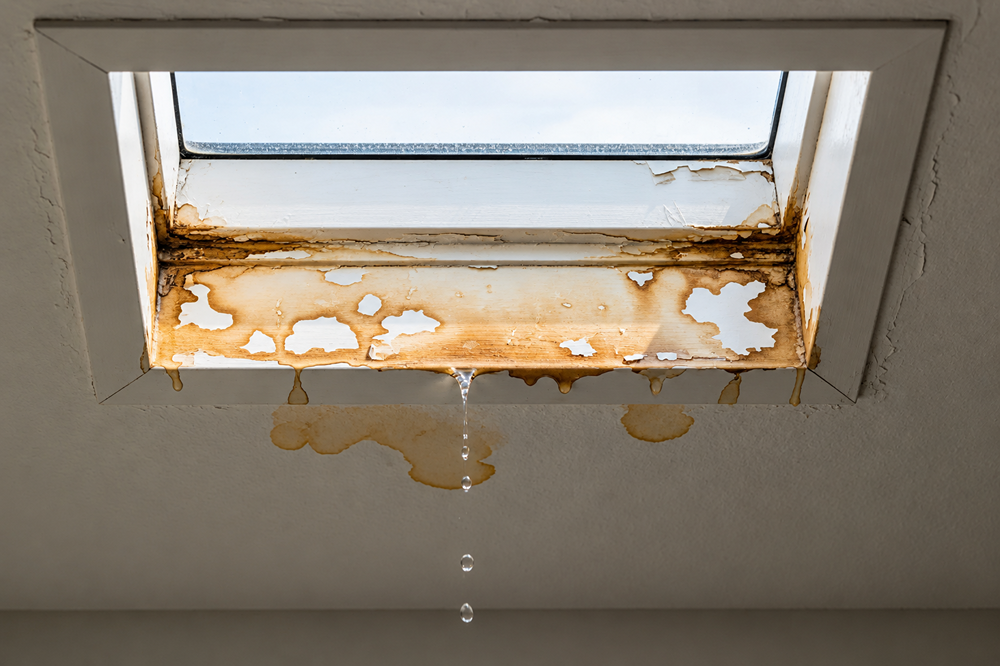
However, when a skylight starts leaking, it can create a serious problem.
Water can damage the roof, insulation, ceilings, walls, and even the framing around the skylight.
Understanding why skylights leak and how they are replaced can help prevent a small problem from becoming an expensive repair.
One of the biggest reasons skylights leak is the way they meet the roof.
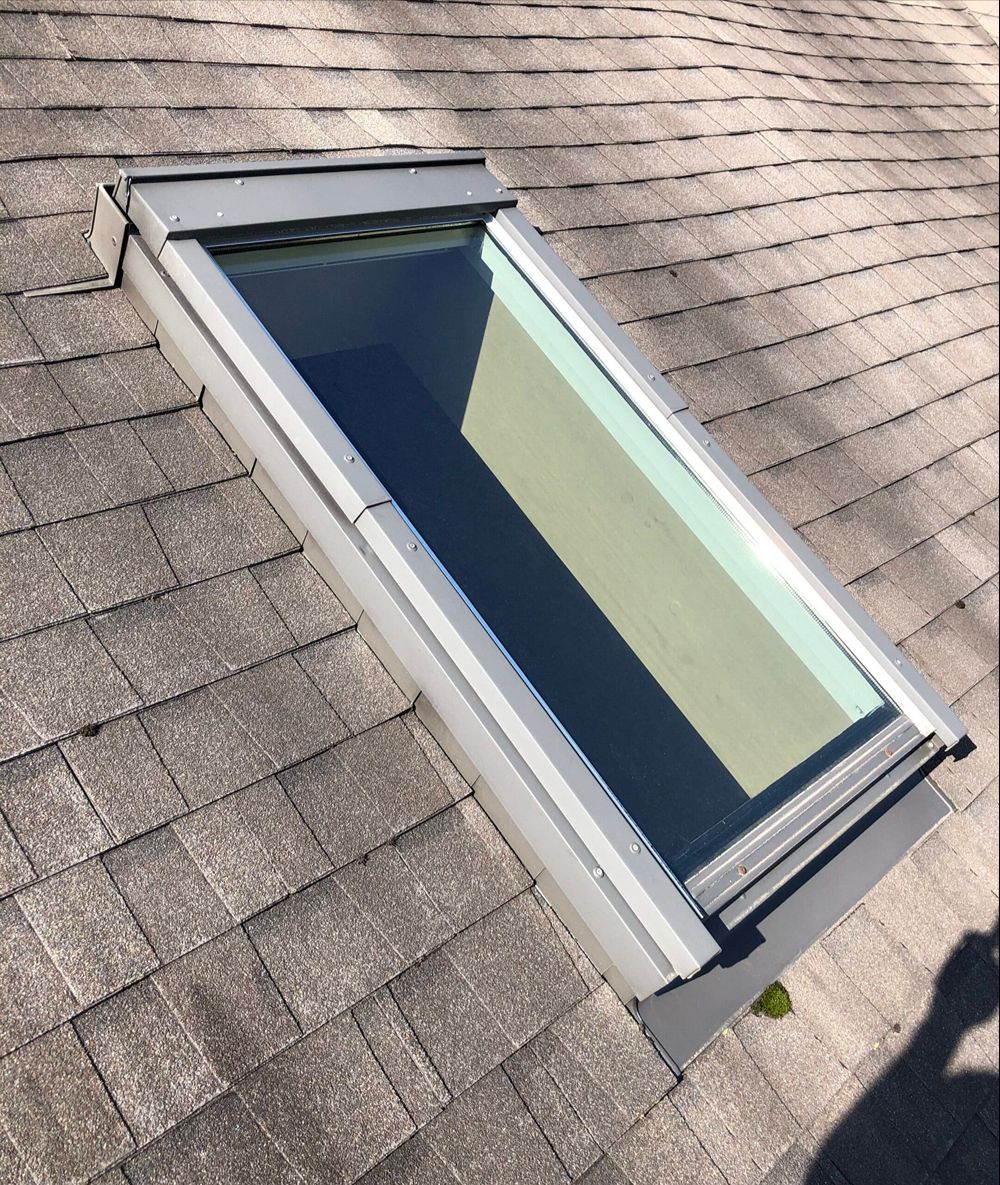
A skylight creates an opening in the roof, so that opening must be sealed properly.
Flashing around the skylight helps direct rainwater away from the opening.
Skylight leaks can be related to the way the skylight and flashing were originally installed or how they were integrated with the roofing system.
Over time, the flashing around a skylight can also deteriorate and develop leaks, particularly as the materials are exposed to years of weather and temperature changes.
Additionally, roof shingles around the skylight can deteriorate, allowing water to get underneath them.
Another common problem is the skylight itself.
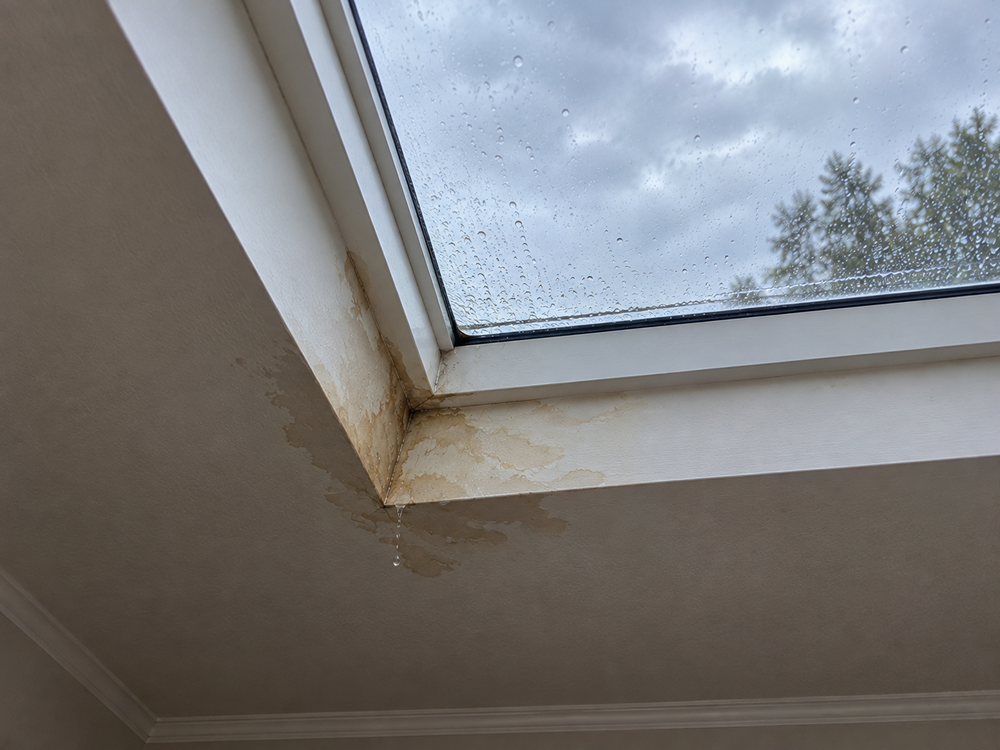
Seals around the glass can fail, frames can crack or corrode, and older skylights can simply reach the end of their useful life.
Sometimes a skylight is not leaking at all, but condensation makes it look like it is.
Proper diagnosis is important before deciding what needs to be replaced.
The best time to prevent a large skylight replacement cost is when a new roof is being installed.
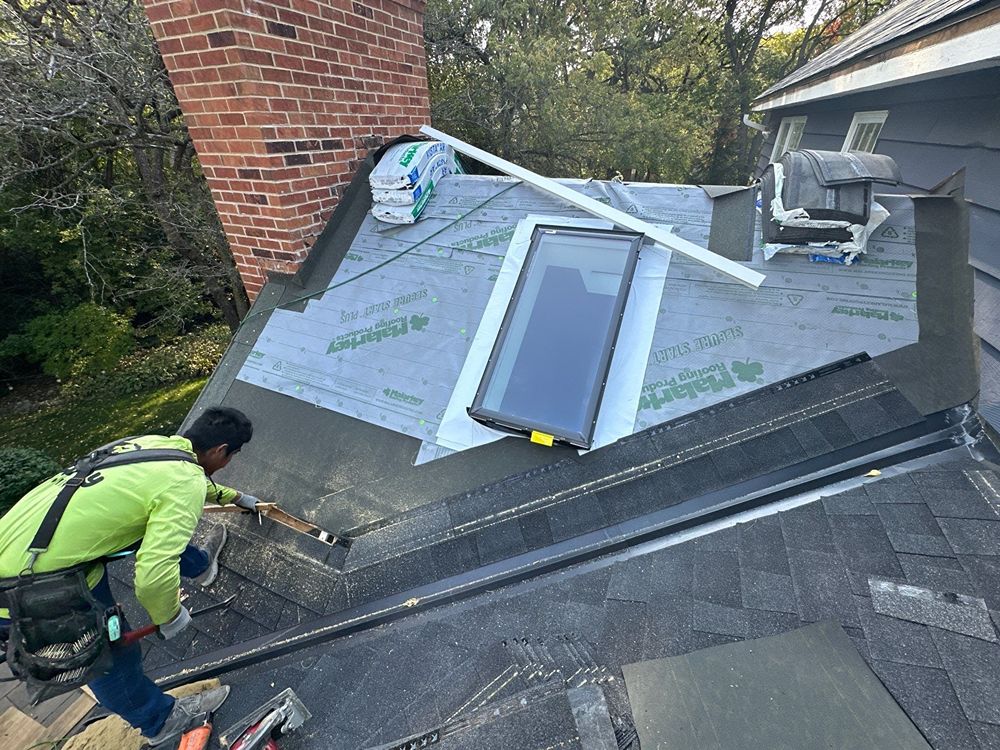
If the skylights are old, damaged, or nearing the end of their life, replacing them while the roof is already being replaced can make the job much easier.
The roofing contractor can install the new skylights as part of the roofing process, rather than having to disturb a finished roof later.
Replacing a skylight after the roof is already completed can be more challenging.
The first step is to carefully remove the shingles and roofing materials around the existing skylight.
The old skylight is then removed, and the roof opening is inspected to make sure there is no hidden damage or rot.
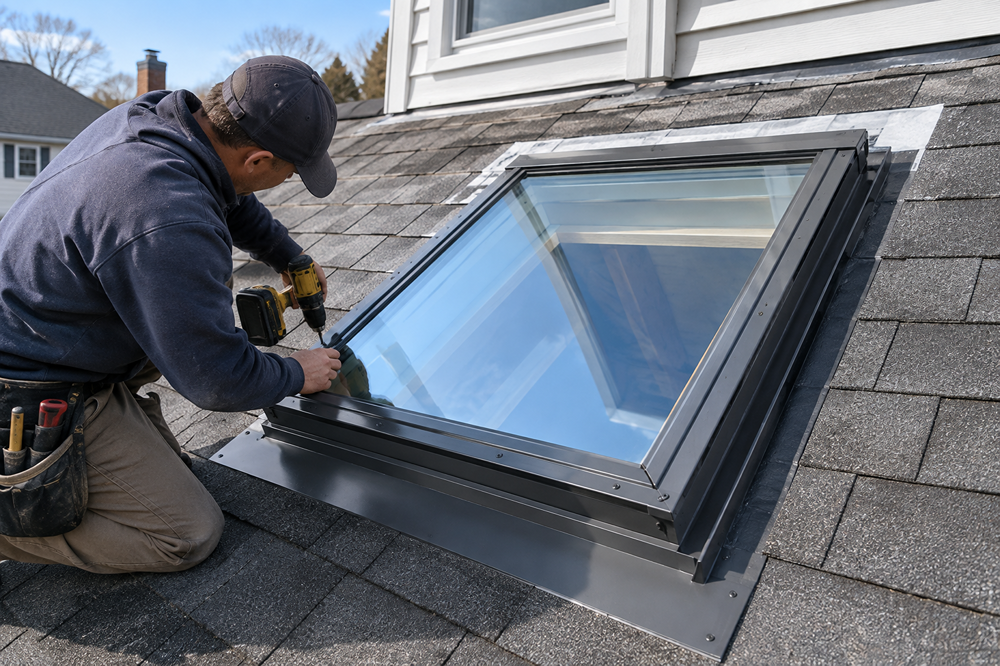
The new skylight is then positioned and secured according to the manufacturer’s instructions.
Some skylights are installed with a flashing kit designed specifically for that model.
The flashing system is very important because it creates a water-resistant transition between the skylight and the roof.
There are also skylights that are self-flashing.
These units have flashing built into the skylight design, which can simplify installation – though they still must be installed correctly and integrated properly with the roofing materials.
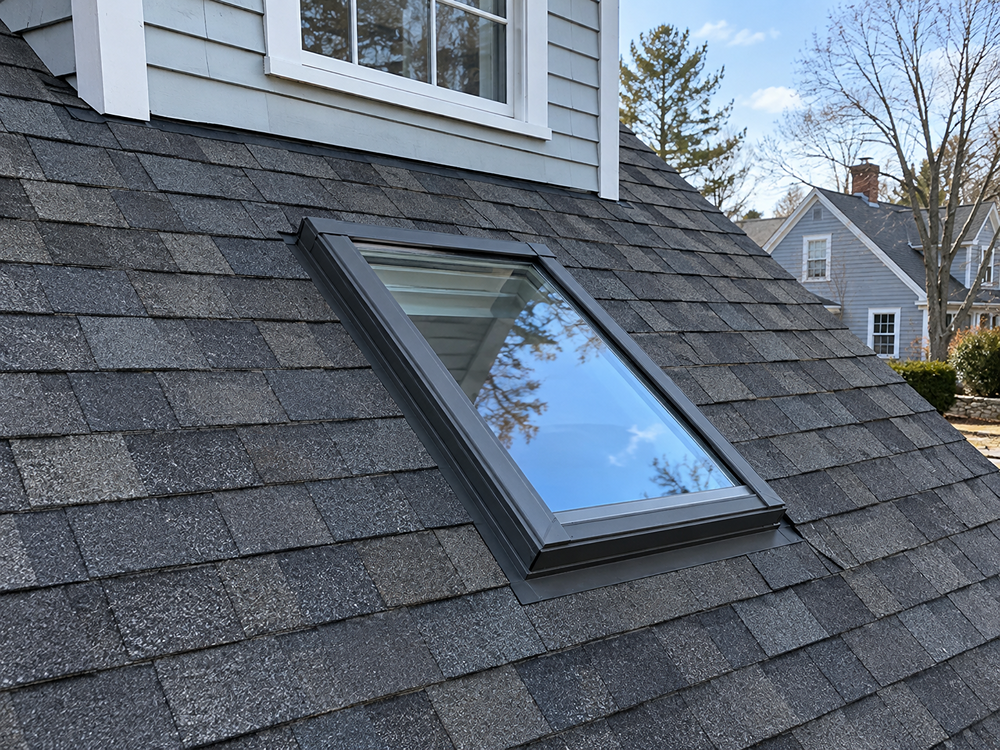
One of the more difficult parts of replacing a skylight on an existing roof is matching the existing shingles.
Shingles need to be removed around the skylight and then replaced after installation.
The new shingles should match the existing roof as closely as possible in color, style, and size.
If the roof is older, finding an exact match may not always be possible.
For that reason, homeowners considering a new roof should think about their skylights at the same time.
Replacing an aging skylight during a roof replacement can reduce future labor, avoid disturbing a newer roof, and provide a cleaner finished installation.

A properly installed skylight should be part of the roofing system, not simply an opening cut into the roof and sealed afterward.
A professional inspection can determine the source of the leak and whether the skylight needs to be replaced.
If the skylight is older, damaged, or the flashing has reached the end of its useful life, replacing the skylight may be the best long-term solution.
The important thing is to identify the problem before it leads to more extensive damage.
If the roof is also nearing the end of its life, replacing the skylight at the same time can make the entire process easier and help prevent the need to disturb a newer roof in the future.
Whether the skylight is being replaced on an existing roof or as part of a complete roof replacement, proper flashing installation and integration with the roofing system are critical to creating a watertight connection and preventing future leaks.
Follow Us on Social Media!