Sometimes I am walking around a house with a Client, and the discussion comes up (for various reasons) centered around their roof’s ridge vent (or lack thereof).
In the moment, working to explain the concept of a ridge vent can be a little challenging, as in the process I often try to point out a ridge vent to them (either on their home or a neighbor’s home) and depending on the Client’s sharpness of vision, this may or may not be effective due to the heights at which ridge vents are found.
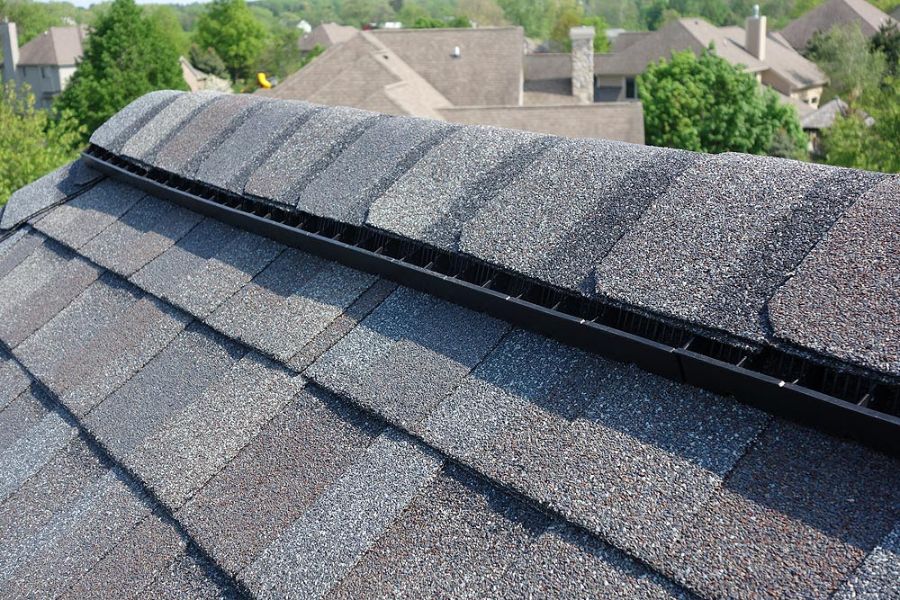
A ridge vent is a type of roof vent that runs along the peak of a house.
It sits at the highest point where two roof slopes meet.

From the ground, you can barely see it because it blends into the roofline (hence the often difficulty in trying to point it out to someone).
Even though it is simple, a ridge vent plays a big role in keeping a home healthy and comfortable.
The main job of a ridge vent is to let warm, moist air escape from the attic.
Heat naturally rises, so the hottest air in a house ends up near the roof.
If that hot air gets trapped, it can cause problems.

In Summer, it can make the house harder to cool, which raises energy bills.
In Winter, trapped moisture can lead to mold, mildew, and even wood rot.
A ridge vent works with other vents, usually (hopefully) soffit vents under the roof’s overhangs.
In fact, to get air to flow most properly, if you have gable vents (the attic windows with the slats on them), they should ideally be closed up to better enhance the inflow of air action created by the soffit vents.

Cool air enters through the soffits, then moves upward through the attic (many times with the assistance of styrofoam baffles that help keep insulation from clogging the soffit vents).
As the air warms, it rises and exits through the ridge vent.
This steady flow of air is called natural ventilation. It helps keep the attic temperature closer to outdoor temperature.
Most ridge vents are made of plastic or metal.
They are covered by shingles, which hide them and protect them from rain and snow.
Inside the vent is a filter or baffle that blocks insects, debris, and wind-driven rain. This design lets air out while keeping water and pests from getting in.
One big benefit of a ridge vent is that it is able run across the whole roof peak (if unobstructed).
This provides even ventilation, instead of just one small spot. Because it uses natural air movement, it does not need electricity. That means fewer parts can break, and it works all the time.
Proper attic ventilation also helps roof shingles last longer.
Too much heat can bake the roof from underneath, which may contribute to shortening its life.
Moisture can weaken wood and insulation.
By letting hot, damp air out, a ridge vent helps protect the roof structure and the home below.
A ridge vent must be installed correctly.
Roofers cut a slot along the ridge, then place the vent over it.
If the opening is too small, airflow will be weak.
If it is too large, weather could get in.
Good installation makes sure the vent works as planned.
Some homes may use other types of roof vents, like box vents or turbine vents.
While these can help, they only ventilate certain areas.

A ridge vent is able to cover the full length of the peak, which often makes airflow more balanced.
A ridge vent is also quieter because it has no moving parts. Homeowners usually like that it does not dramatically change the look of the roof.
Ridge vents can also help reduce ice dams in cold climates.
Ice dams form when heat from the attic melts snow on the roof.
The water runs down and refreezes near the edge, creating thick ice.
By keeping the attic cooler, a ridge vent lowers the chance of uneven melting.
The key to the most optimally performing systems is having a ridge vent properly installed with soffit vents to go along with it.
We work through situations all the time where one part of this 2-headed equation may not be situated as best it should be.
If soffit and ridge vents are all properly in place, however, you will have a terrifically vented attic that is beneficial year round for your entire home.