Soffit vents are small openings built into the underside of a roof overhang.
That underside is called the soffit and it wraps around the roof edges of most houses.
The soffit vents help fresh air move into the attic while pushing warm, moist air out, most ideally through a ridge vent at the top peak of the roof.
Without them, heat and moisture can build up and cause damage over time.
Soffit vents may seem simple, but they play a huge role in keeping a home healthy. Understanding how they work helps you see why their design matters.
A soffit is the flat surface you see when you stand under the edge of a roof and look up. It covers the gap between the outer wall and the roofline.
This space needs airflow so the attic does not trap heat or damp air. Soffit vents provide the entry point for cooler outside air to flow upward. This moving air helps the whole roof system breathe.
There are different styles of soffit vents and each works a little differently.

Some are round discs spaced every few feet.
Others are small rectangles placed in rows.
However, many contractors (myself included) and homeowners prefer a long continuous vent.
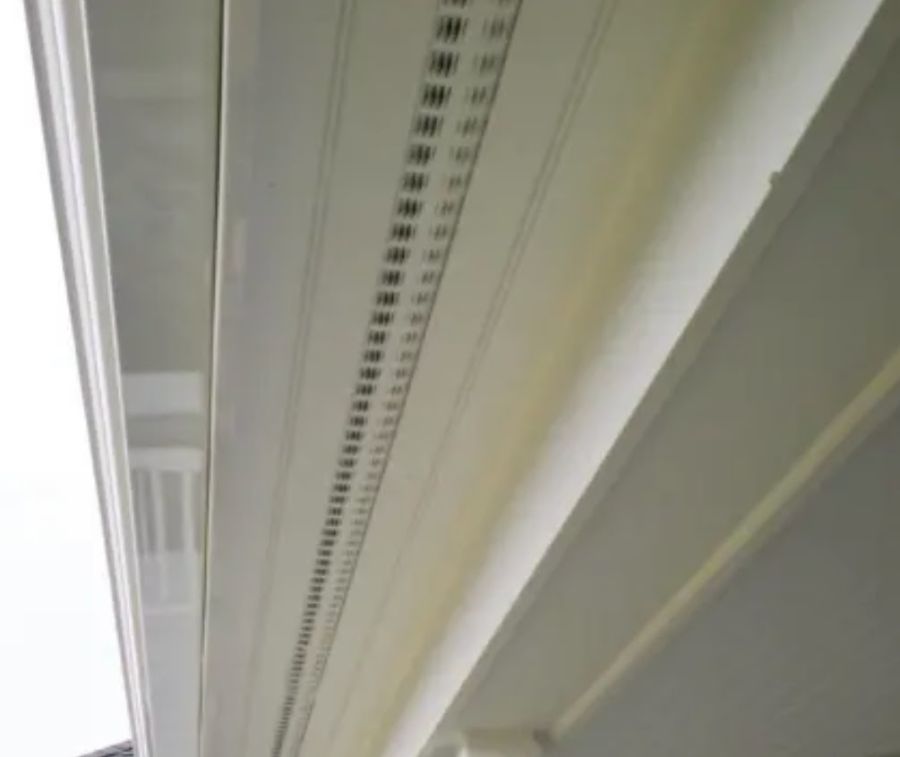
This type runs straight along the middle of the soffit and stretches almost the full length.
Picture a narrow strip that looks like a clean line cut through the panel.
Instead of many separate holes the opening is one steady channel.

Air can enter along the entire strip rather than just a few points. This creates smooth, even airflow across the attic floor.
Although I am admittedly a bit biased, that long center style is popular for good reasons.
First, it spreads fresh air evenly across the entire roof edge.
Instead of strong airflow in one spot and weak airflow elsewhere, the balance stays steady. Even ventilation helps prevent hot pockets that can warp shingles or dry out wood.
Second, the long strip blends neatly with the look of the house. Because it runs straight through the center it often appears tidy and modern.
Many homeowners like that it does its job without drawing attention.
The vent becomes part of the design instead of a scattered set of holes.
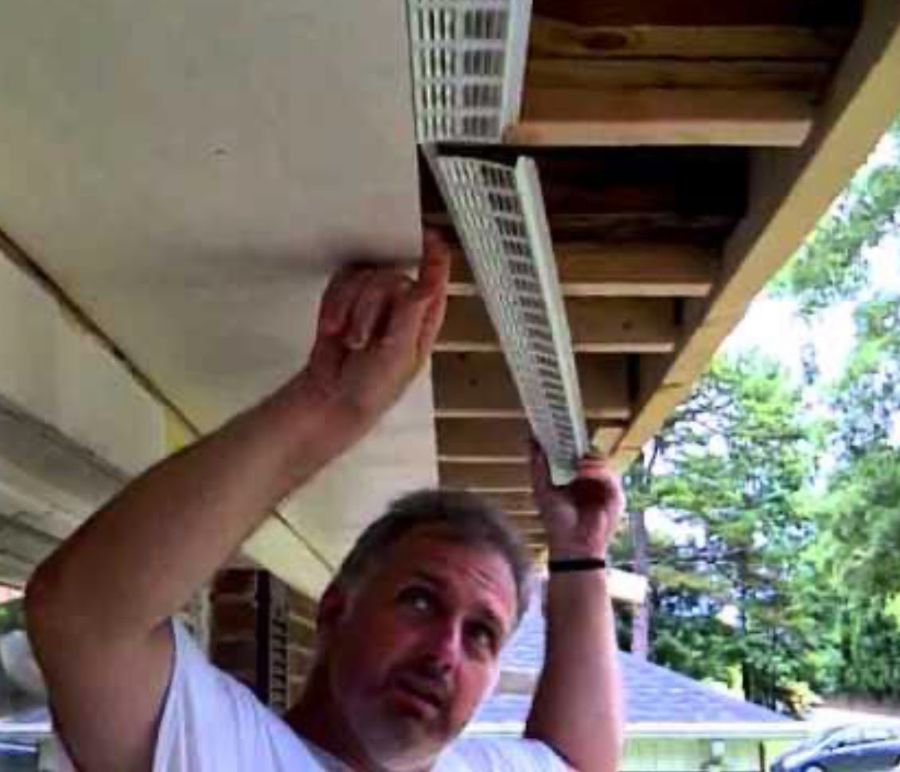
Third, installation can be simpler for those who work with long panels. Cutting one continuous opening may take less measuring than placing many small vents.
Maintenance can also be easier since cleaning one long vent is more direct.
These center strip vents still need protection to work properly.
A fine screen or filter on the backside of the vent blocks insects, leaves, and debris from entering. This design keeps air moving while stopping unwanted visitors.
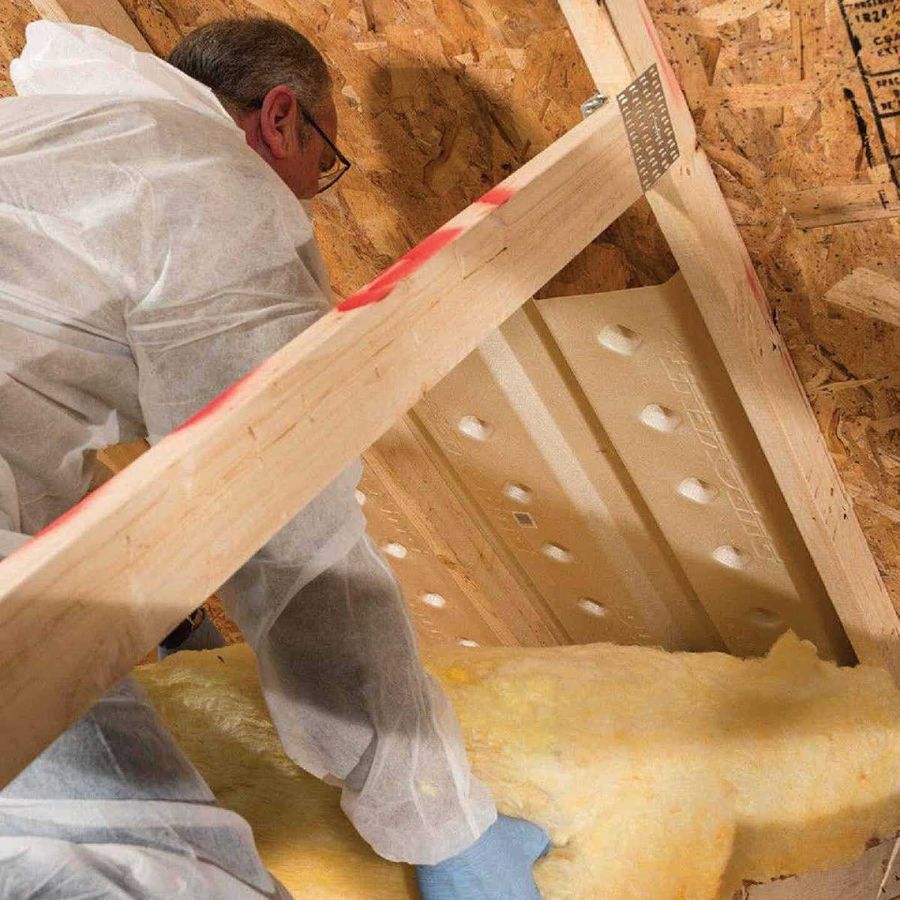
On the interior, baffles should be installed in the attic, where the roof rafters come down and meet the soffit vents, to form a sort of air channel/barrier that allows the air to flow more directly into the attic, while at the same time protecting the incoming air from getting accidentally blocked by any insulation that may be in its vicinity.
Regular checks (once in the Spring, once in the Fall) should be conducted to make sure the openings stay clear year after year.
The system works best when paired with ridge vents or other exhaust openings higher on the roof.
Cool air enters along the soffit strip and rises naturally as it warms. Then the warmer air exits above, creating steady circulation.
Over time, this constant airflow protects insulation, framing, and roof materials.

It can also help lower cooling costs by reducing trapped heat. Moisture control lowers the chance of mold, rot, and peeling paint.
When you look up at a house and see a long, neat vent running right down the middle of the soffit, you are seeing one of the most effective designs available for optimizing the natural airflow of your home.
These continuous center soffit vents manage the airflow every day, helping your roof last longer and stay stronger and healthier.
Follow Us on Social Media!