Wood siding and roof shingles have to meet somewhere, but they do not necessarily have to be touching.
In fact, leaving a little space between them can make a big difference in how well the siding holds up over time.
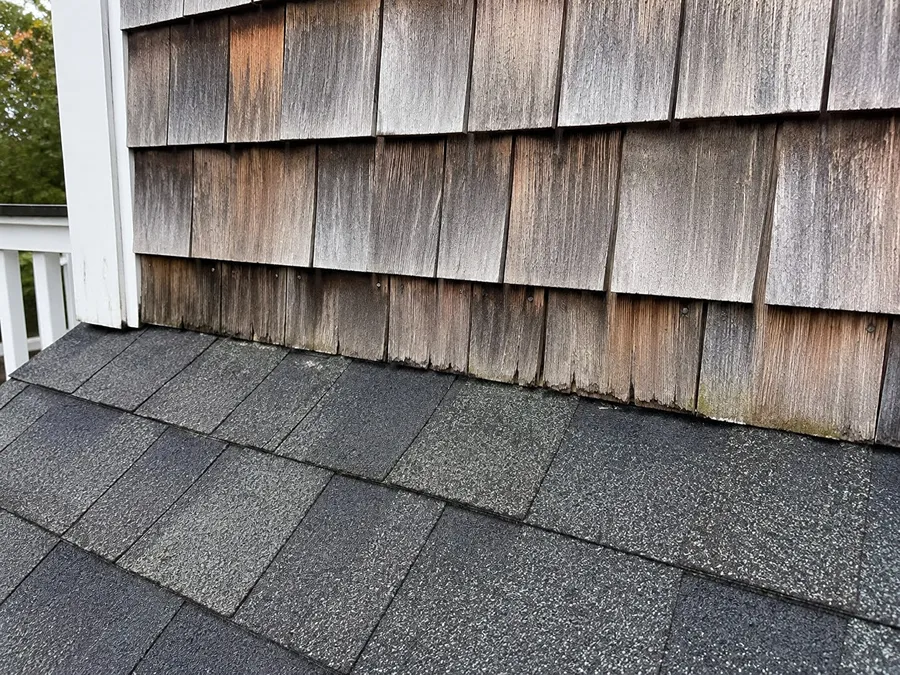
Wood siding should not be installed so that it rests directly on, or touches, roof shingles.
Direct contact can create a moisture problem that may lead to peeling paint, failed stain, rot, and hidden damage.
The biggest issue is water.
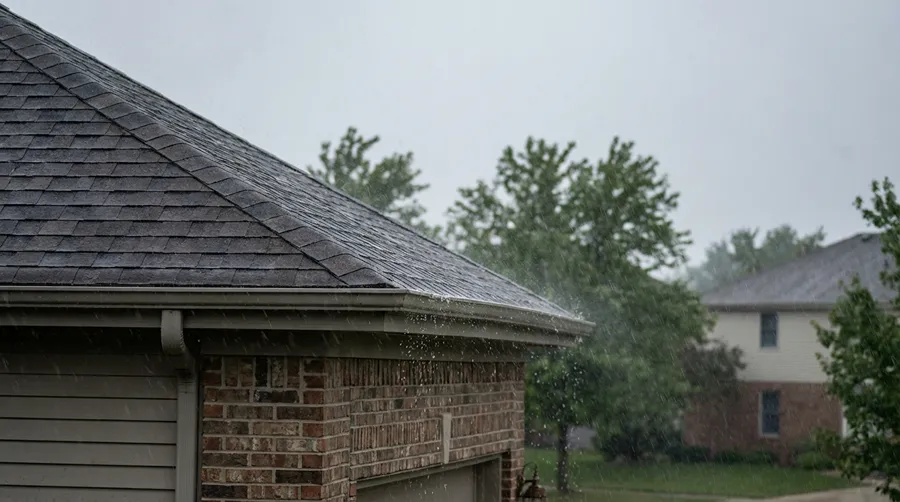
Roof shingles are designed to shed rainwater downward.
When shingles meet a vertical wall, wind-driven rain, snow, and roof runoff can keep that area damp.
If wood siding sits directly against the roofing, the bottom edge of the siding can repeatedly absorb moisture.
Wood and water are not a particularly good long-term combination.
As the siding absorbs moisture, it can swell, shrink, crack, and eventually rot.
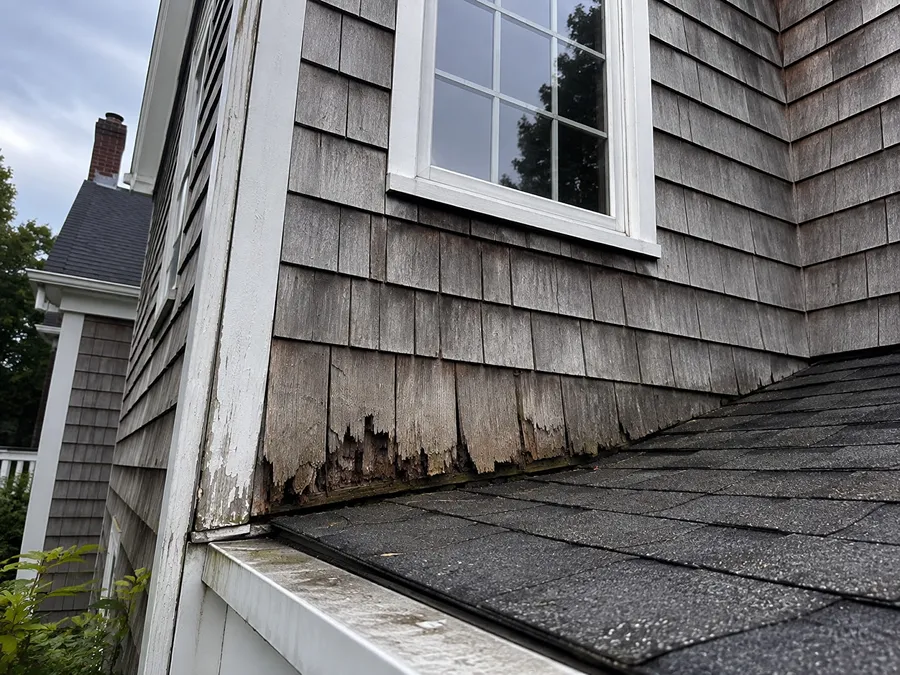
Once rot begins at the bottom edge, it can spread before it’s noticed.
Water can work its way behind the siding and affect trim, sheathing, framing, and other parts of the wall.
There is also the issue of debris.
Leaves, pine needles, dirt, and other debris can collect where the siding meets the roof.
When the siding is touching the roof shingles, that debris can trap moisture against the wood and slow the drying process.
So, how much space should there be?
Modern building codes and installation instructions do not provide one universal clearance number for every type of wood siding.
The current International Residential Code requires siding to be installed according to applicable manufacturer instructions, and those instructions often control the required roof clearance.
As a general rule, at least 1 inch of clearance between the bottom edge of the siding and the roof surface is commonly specified for many modern siding products.
For example, LP SmartSide requires a minimum 1-inch clearance where its siding meets a roof line.
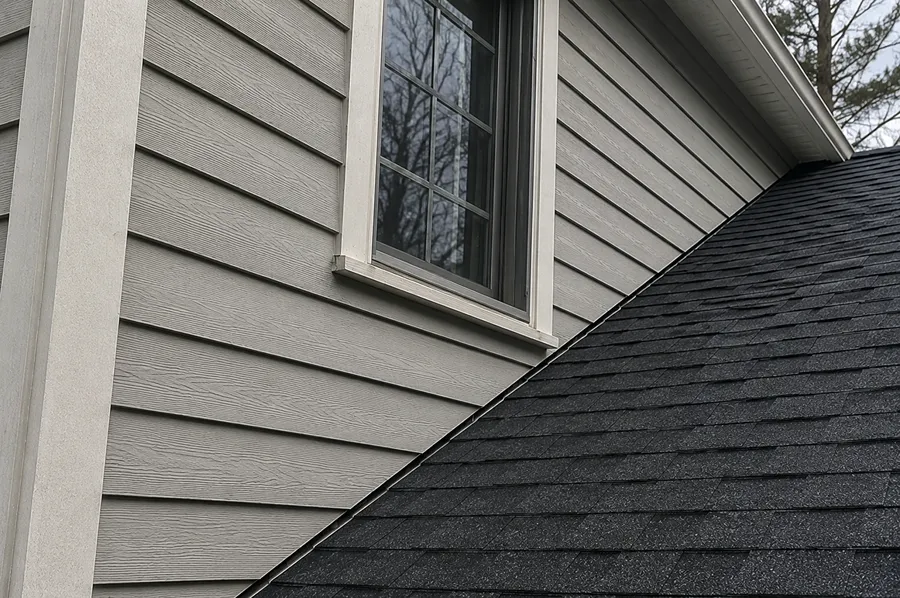
However, some natural wood siding manufacturers recommend a larger gap.
Real Cedar recommends a minimum 2-inch gap between siding or trim and a roof to help prevent moisture from wicking into the wood.
For that reason, if you are dealing with traditional wood siding, a 2-inch clearance is often the safer target unless the siding manufacturer, local building official, or project details specify otherwise.
At a minimum, the siding should not be touching the roof shingles.
Aiming for 1–2 inches of clearance will keep you safe in the majority of cases.
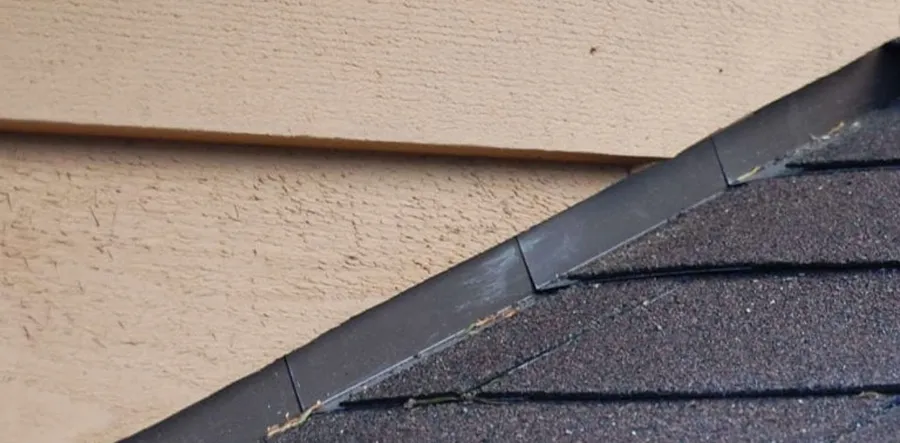
Proper flashing is equally important.
At a roof-to-wall intersection, step flashing helps direct water away from the wall.
Kick-out flashing can also be used where appropriate to prevent concentrated roof runoff from being dumped against the siding.
Simply creating a gap may not solve the problem if water is still being directed behind or against the wall covering.
If your siding currently touches the roof shingles, it does not automatically mean the entire wall is rotten.
The area should be inspected for soft wood, peeling paint, staining, swelling, or other signs of moisture damage.
The important thing is not to ignore an area simply because it is small or difficult to see.
Wood siding and roof shingles should not be in direct contact.
A little separation helps the siding dry, reduces moisture wicking, and gives both the roof and wall a better chance of lasting longer.
Follow Us on Social Media!