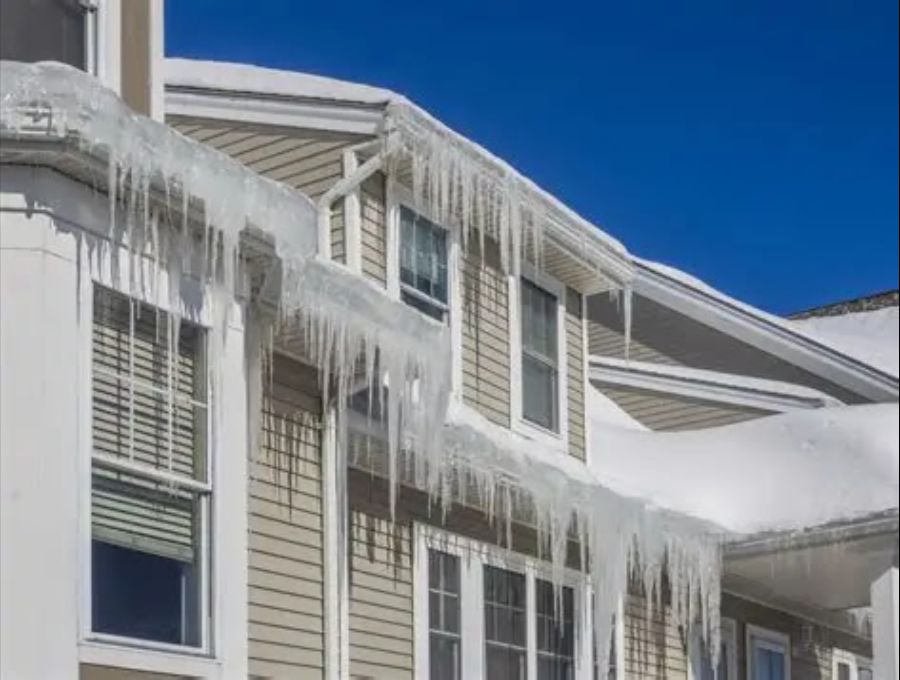
In New England, overall, we are VERY fortunate when it comes to ice dams.
In the Winter of 2014, we were hit REALLY hard with them throughout the region and in 2015 we went through a ‘junior version’ of the previous year.
Thankfully, dealing with ice dams is not as common in this part of the country as it is in other places.
The ice dam is a common winter roofing problem in colder climates.
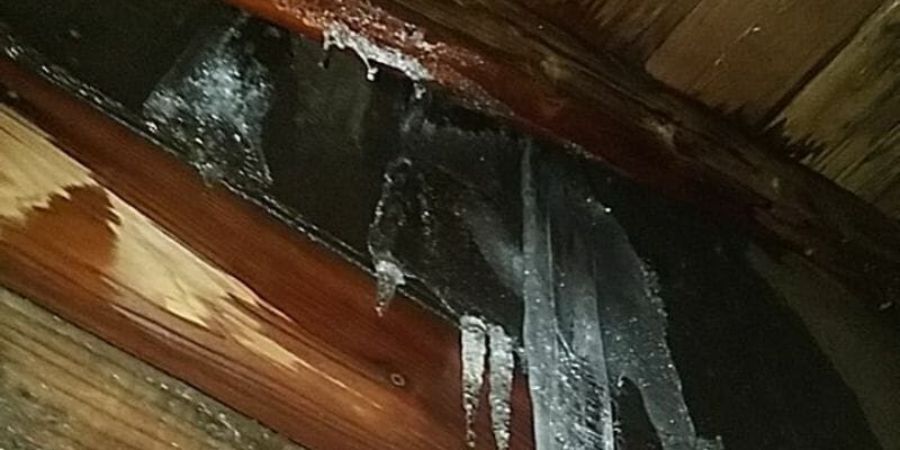
Ice dams may even look harmless, like a ridge of ice along the edge of a roof, but it can cause serious damage inside a home.
Understanding how ice dams form, how to prevent them, and what to do if one appears can save homeowners money and a ton of stress.
Ice dams happen when heat from inside a house escapes into the attic and warms the roof.
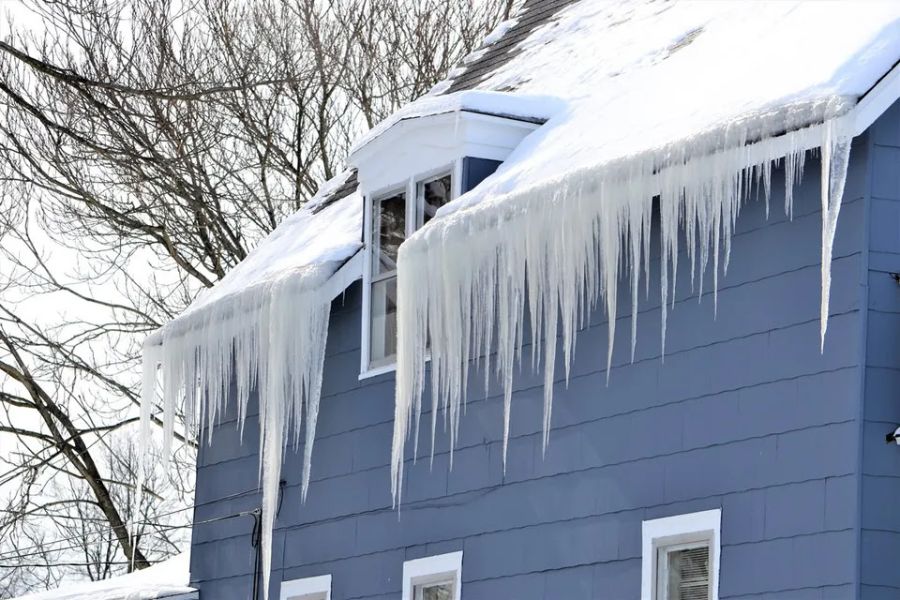
Snow on the upper part of the roof melts, and the water runs down toward the colder edge.
The eaves, which hang over the outside walls, stay colder because they are not warmed by indoor heat.
When the melted water reaches this cold section, it freezes again.
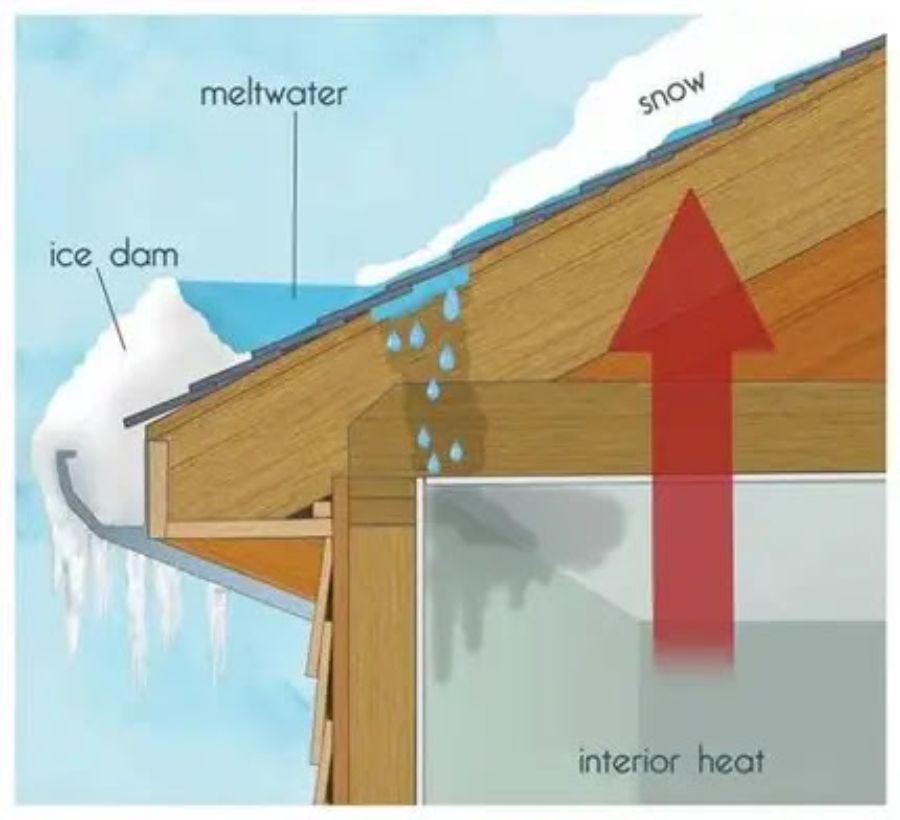
Over time, more melting and refreezing creates a thick ridge of ice. This ridge blocks new melting snow from draining off the roof.
When water has nowhere to go, it backs up under the roof shingles.
Roof shingles are meant to shed water downward, not hold standing water.
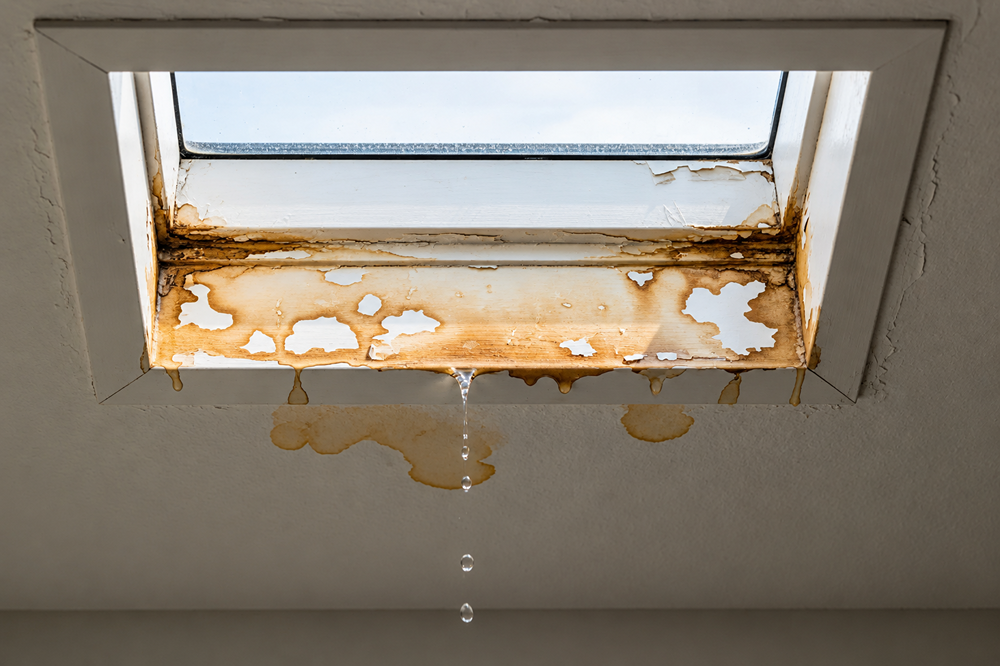
As the water pushes under them, it can leak into the roof deck, attic, insulation, ceilings, and walls.
This can lead to stains, peeling paint, warped wood, mold growth, and ruined insulation.
Prevention focuses on keeping the roof surface cold and the attic temperature steady.
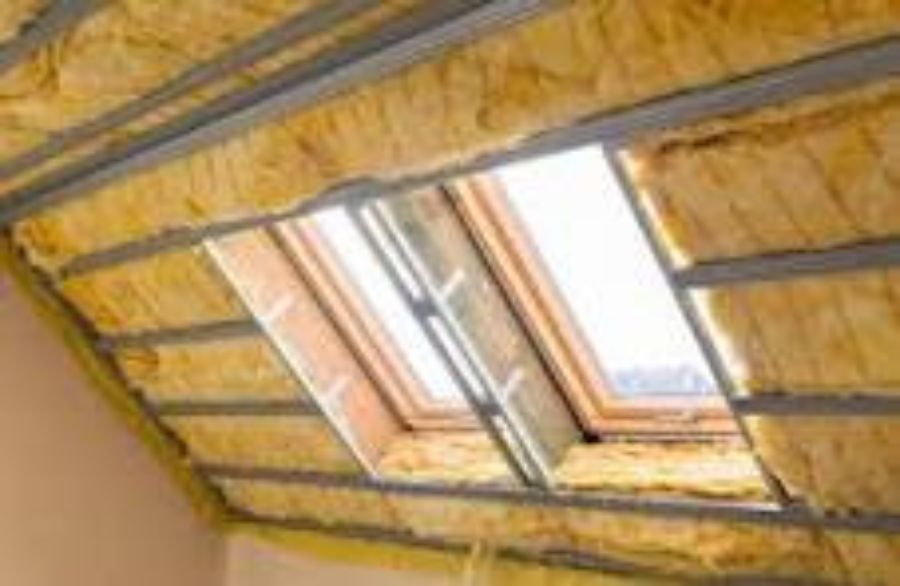
The first step is proper insulation.
Good attic insulation slows the flow of heat from living spaces into the attic.
Air sealing is just as important.
Gaps around light fixtures, attic hatches, plumbing vents, and wiring holes should be sealed to stop warm air leaks.
Ventilation also helps.
Soffit and ridge vents allow cold outdoor air to flow through the attic, keeping the roof temperature closer to the outside temperature.
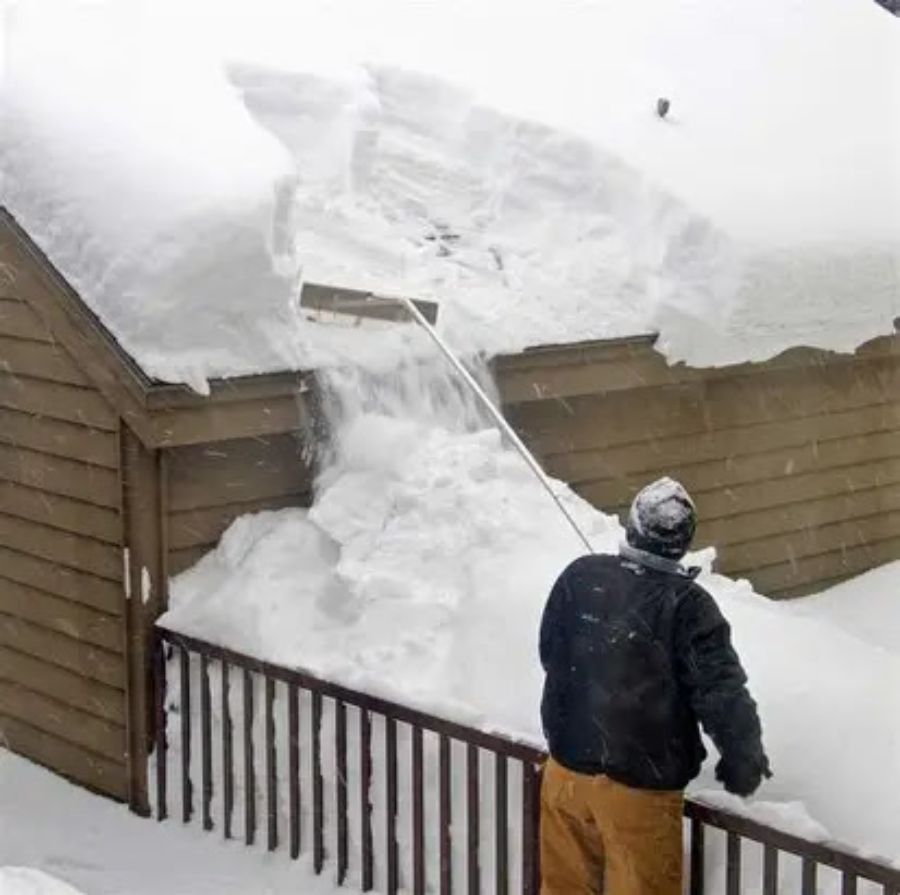
Removing snow from the roof edge with a roof rake after heavy storms can also reduce the chance of ice dam buildup.
If an ice dam has already formed, avoid using sharp tools or climbing onto an icy roof.
Chipping at the ice can damage your shingles and is dangerous.
A safer short-term method is to place calcium chloride ice melt in a nylon stocking and lay it across the dam so it melts a channel through the ice.
This helps trapped water drain.
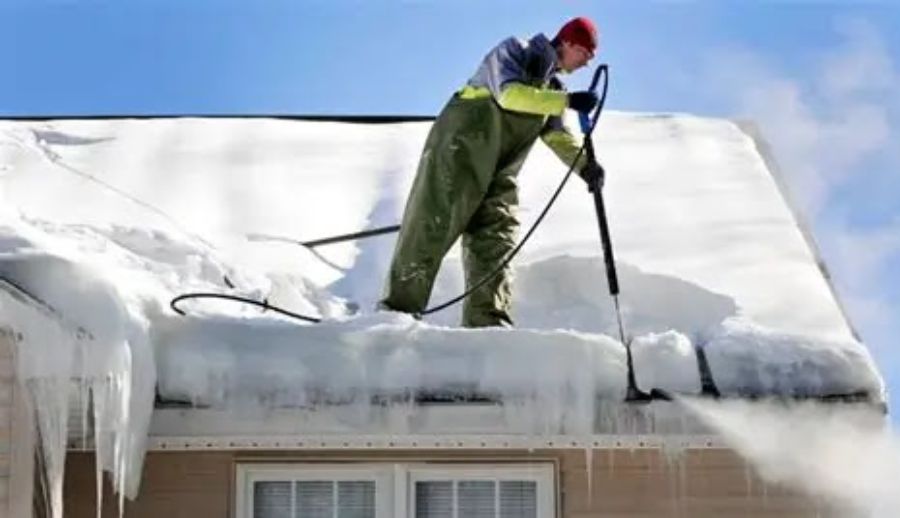
For large or stubborn dams, it is best to call a professional who can use low-pressure steam to remove the ice safely.
After an ice dam, check for damage inside and out.
Look for water stains, damp insulation, and peeling paint.
Wet insulation should be replaced because it loses its ability to resist heat flow.
Roof shingles, underlayment, and flashing may need repair.
A contractor can inspect the attic for mold and rot if that may be a concern.
Fixing the root causes, like poor insulation or ventilation, is key to stopping the problem from returning next winter.
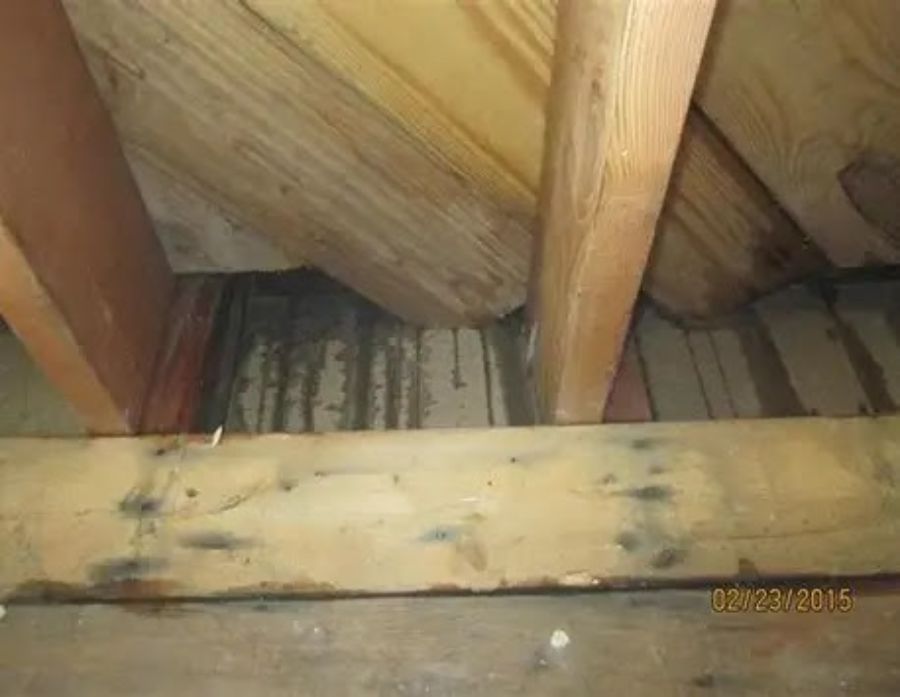
Homeowners should also document any damage with photos and notes in case an insurance claim is needed.
Keep receipts for repairs and cleanup.
Dry wet areas quickly with fans and dehumidifiers to limit mold growth.
If ceilings sag or walls feel soft, call a professional right away.
Long-term solutions may include adding more insulation, improving attic ventilation, or installing heat cables along the roof edge.
These steps help protect the home through future Winters and reduce the risk of another ice dam forming.
As with most things, early action and maintenance make Winter problems like pesky ice dams less likely to occur.
Follow Us on Social Media!