Have you ever looked at a roof and noticed that the shingles below a chimney sometimes appear much cleaner than the shingles around them?
It is an interesting thing to spot once you know to look for it.
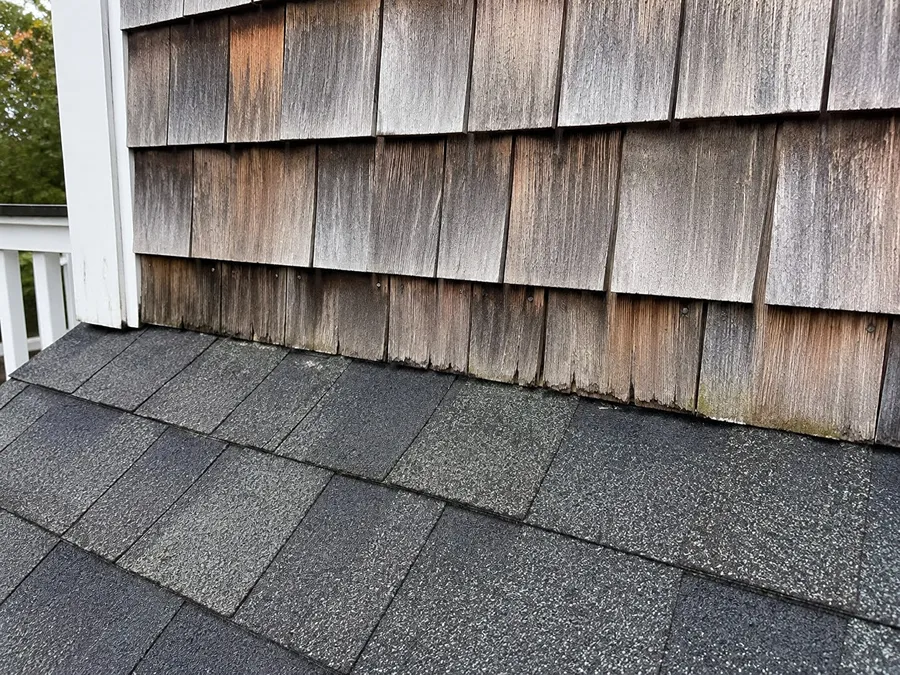
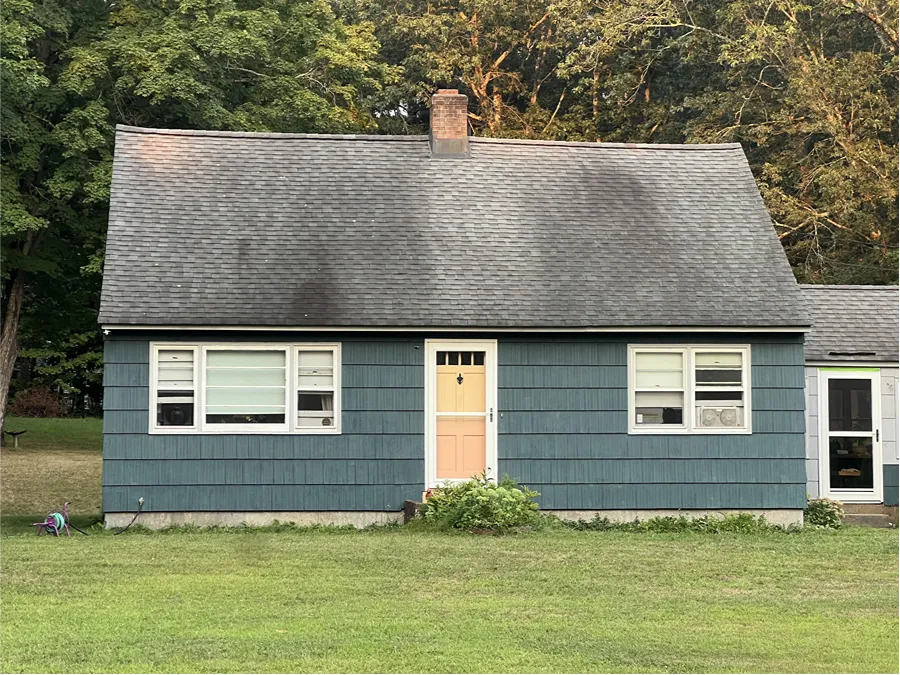
A roof may have dark streaks, green growth, or what many people refer to as mold and mildew.
Yet, directly below the chimney, there may be a noticeably cleaner section of shingles.
Why does this happen?
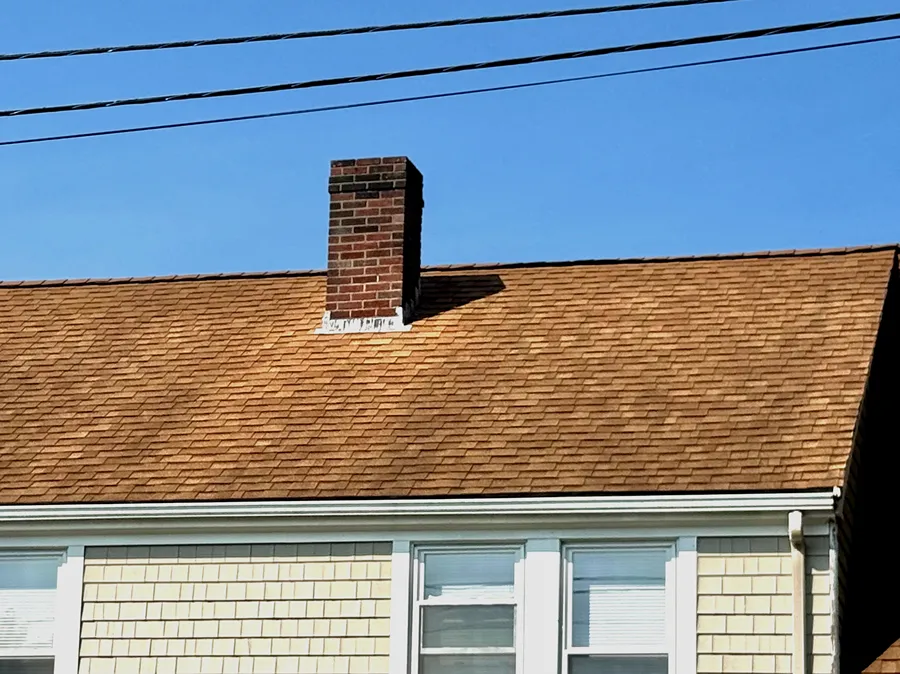
In many cases, the answer may be the metal used around the chimney, particularly lead or copper flashing.
Lead flashing is very common around chimneys on New England homes. Copper is also used in certain applications.
As rainwater travels over lead or copper flashing, the interaction between the water and the metal can help create conditions that discourage algae and moss growth on the shingles below.
That water then washes across the roof.
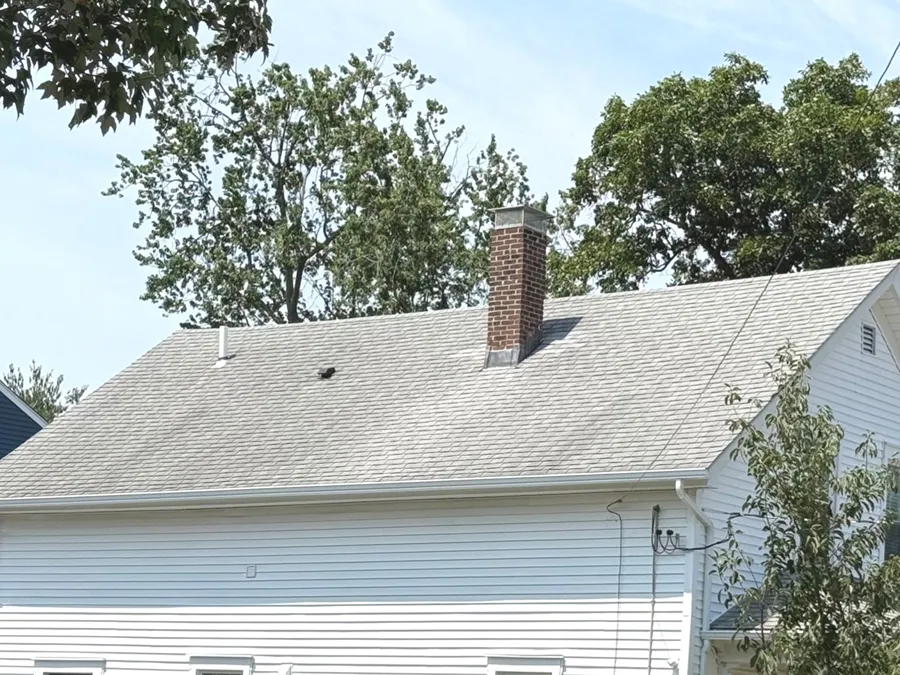
Over time, this can create the cleaner-looking area often seen beneath a chimney.
This is one of those simple observations that can lead to an interesting home maintenance idea.
If metal flashing helps keep the shingles below a chimney cleaner, could the same basic principle be used closer to the top of the roof?
The answer is yes.
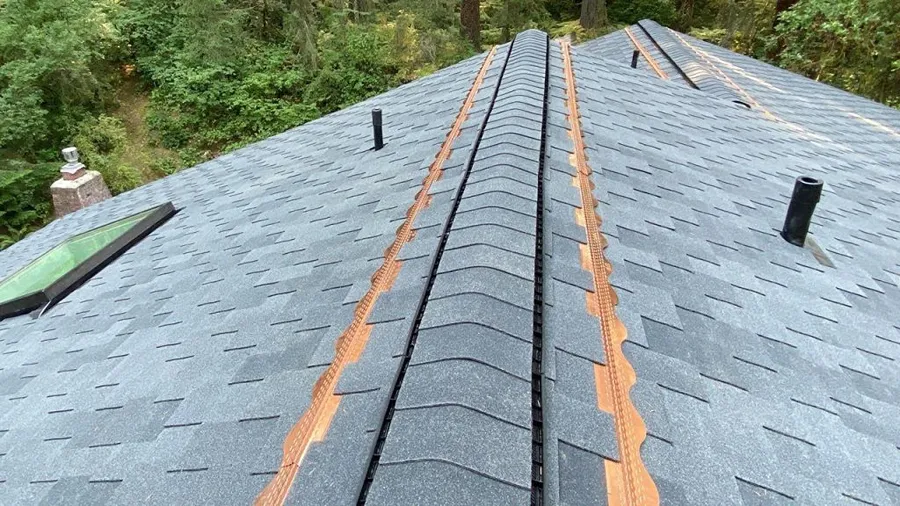
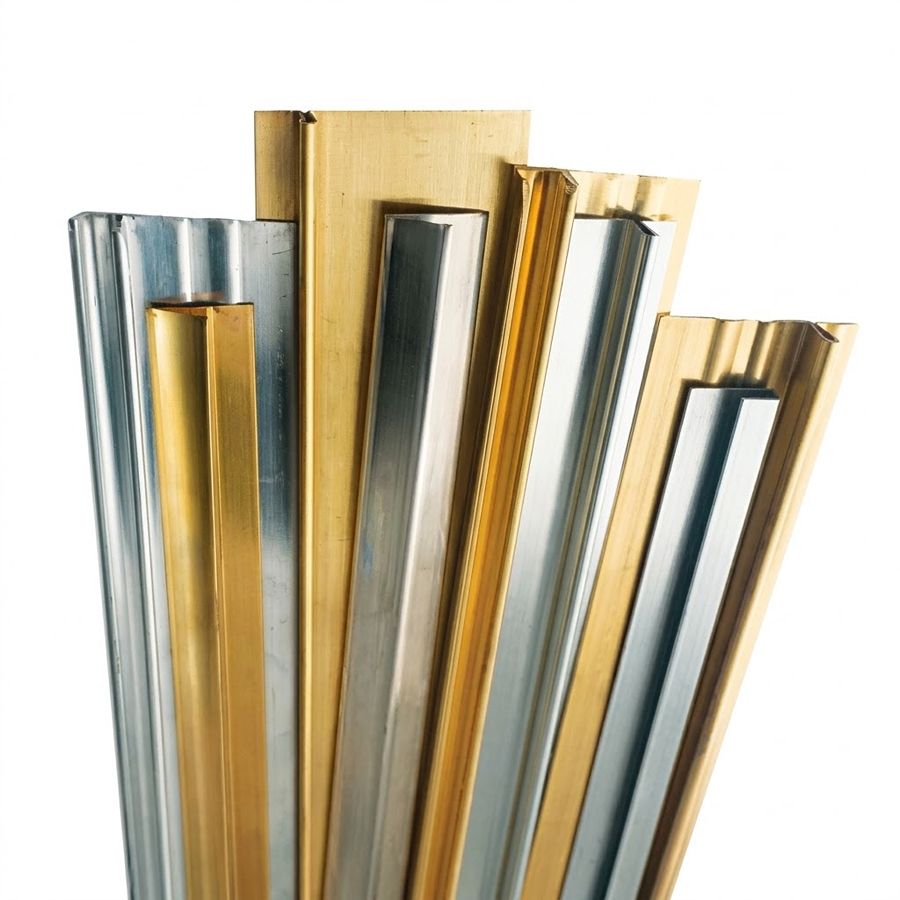
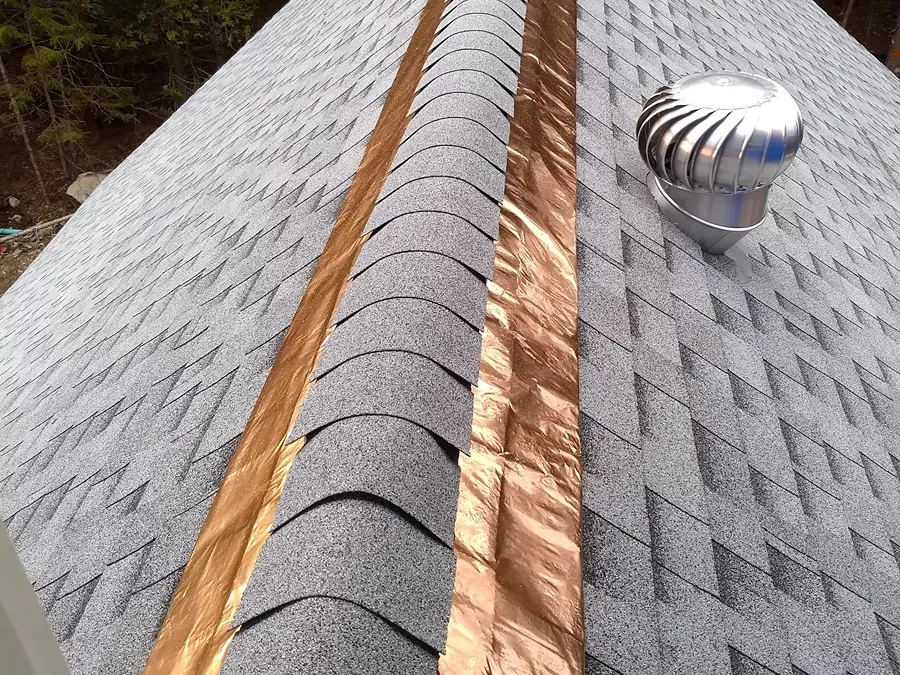
Copper or zinc strips can be installed near the ridge of the roof, often near the ridge vent.
Since the ridge is at the highest point of the roof, rainwater begins its trip down the roof from this general area.
If that water first passes over copper or zinc, it can carry metal ions farther down the roof surface.
The thought is simple.
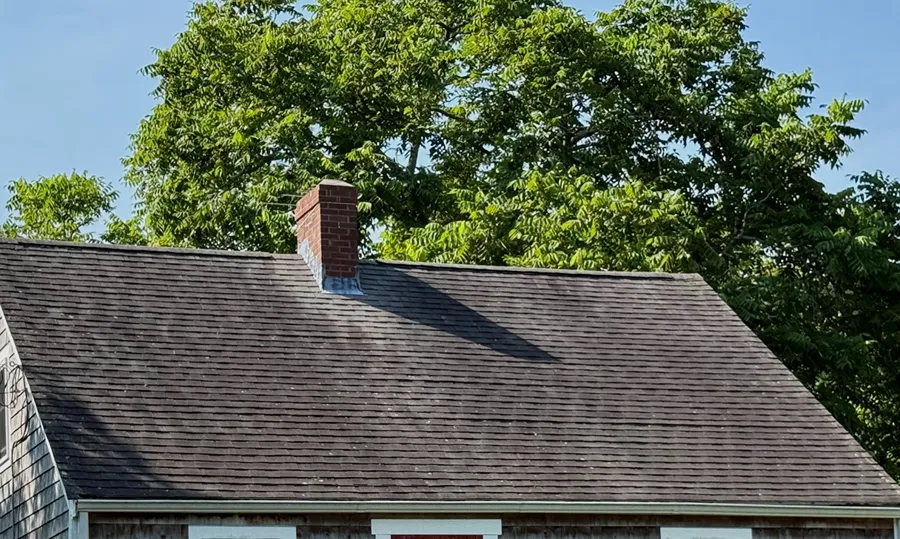
Instead of having a cleaner section below the chimney, the goal is to allow rainwater to distribute the benefits of these metals farther across the roof.
Dark roof streaks are often called mold or mildew by homeowners.
In many cases, the staining is actually algae.
It tends to be noticeable on roof areas that remain damp, receive less sunlight, or are surrounded by trees.
North-facing roof slopes can often show staining sooner than other areas.
Copper or zinc strips are not a miracle cure.
If a roof already has years of heavy staining, moss, or organic growth, installing metal strips will not suddenly make the shingles look brand new.
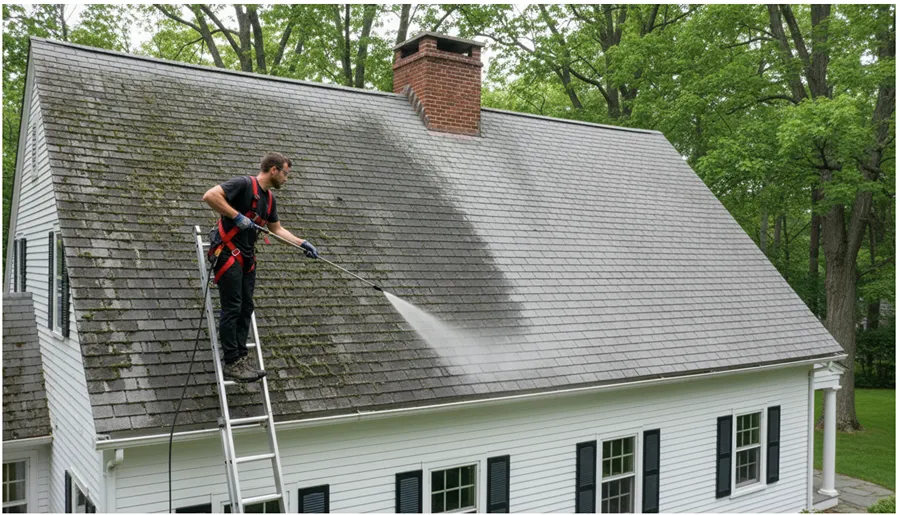
The roof may first need to be properly cleaned.
The real value of these strips may be in helping to slow the return of growth.
Every time it rains, water can wash over the metal and continue down the shingles.
It is the same basic principle that may already be at work below lead or copper chimney flashing.
Of course, proper installation matters.
Metal strips should never be added to a roof in a way that damages shingles, creates a leak, or interferes with the operation of a ridge vent.
The other metals and components on the roof should also be considered because certain metals can react with one another.
As an example, copper and aluminum traditionally do not play well together.
This does not mean that aluminum gutters at the roofline will automatically have a problem.
However, copper runoff, particularly where water regularly sits or remains trapped, can increase the potential for corrosion of aluminum.
Metal compatibility and drainage should always be considered before installing copper strips.
This is certainly not a one-size-fits-all solution for every roof.
However, it is a fascinating example of how paying attention to a home can lead to maintenance ideas.
The next time you see a stained roof with a chimney, look closely at the shingles below the chimney flashing.
You may notice a clean area.
If you do, the metal flashing and rainwater may have been working together for years.
Installing copper or zinc strips near the ridge simply takes that same basic idea and puts it to work across a larger area of the roof.
It is a simple, thoughtful approach to roof maintenance that may help a roof stay cleaner longer while using a principle many homeowners throughout New England may already have seen at work on their own homes.
Follow Us on Social Media!